AI Automation for Scalable Businesses

At Bitlogia Digital, we build AI automation systems that eliminate manual work, optimize operations, and drive scalable growth.

5000+

AI Automation Projects Delivered

5000+

Business Workflows Automated

1000+

AI Automation Systems Built

AI Automation Case Studies

Bitlogia Digital builds intelligent AI automation systems that streamline workflows, reduce manual effort, and help businesses operate more efficiently.


AI Products Built by Bitlogia Digital

OmniReplai

AI-powered platform that automates customer communication, responses, and engagement across multiple channels.

Searchly Pro

AI-powered platform that automates customer communication, responses, and engagement across multiple channels.

Industries We Serve

Discover a Seamless World of Professional Services, Appointments, and Secure Transactions – All in One Place!

1

SaaS & Technology

2

Marketing Agencies

3

E-commerce

4

B2B Sales Teams

5

Enterprise Support Systems

6

Content & Media Companies

Clients We’ve Helped Scale with AI Automation

AI-Powered Task Intelligence System for Automated Client Workflows

Smart task extraction, client detection, and automated sheet routing powered by AI-driven workflow orchestration.

Overview:

This system automates the entire task management pipeline by capturing incoming task data from Google Sheets, intelligently analyzing it using AI, and distributing it to the correct client-specific workspace. It eliminates manual sorting, reduces human error, and ensures every task is structured, categorized, and assigned with precision.

Using advanced prompt engineering and OpenRouter AI, the workflow extracts structured task data such as client name, department, assigned team member, status, and deadlines. Each task is then dynamically routed into the correct Google Sheet based on predefined client mapping logic.

Core Challenges:

Agencies often struggle with unstructured task entries, manual categorization, and delays in assigning work to the correct client sheets. This leads to inefficiencies, missed tasks, and inconsistent data organization across teams.

Solution Delivered:

An intelligent automation system that:

→ Detects new task entries in real-time from a master Google Sheet
→ Uses AI to extract structured task information
→ Automatically identifies the correct client and department
→ Routes tasks into dedicated client-specific Google Sheets
→ Marks processed entries to avoid duplication

This ensures zero manual sorting and fully structured task distribution across the organization.

Workflow Implementation

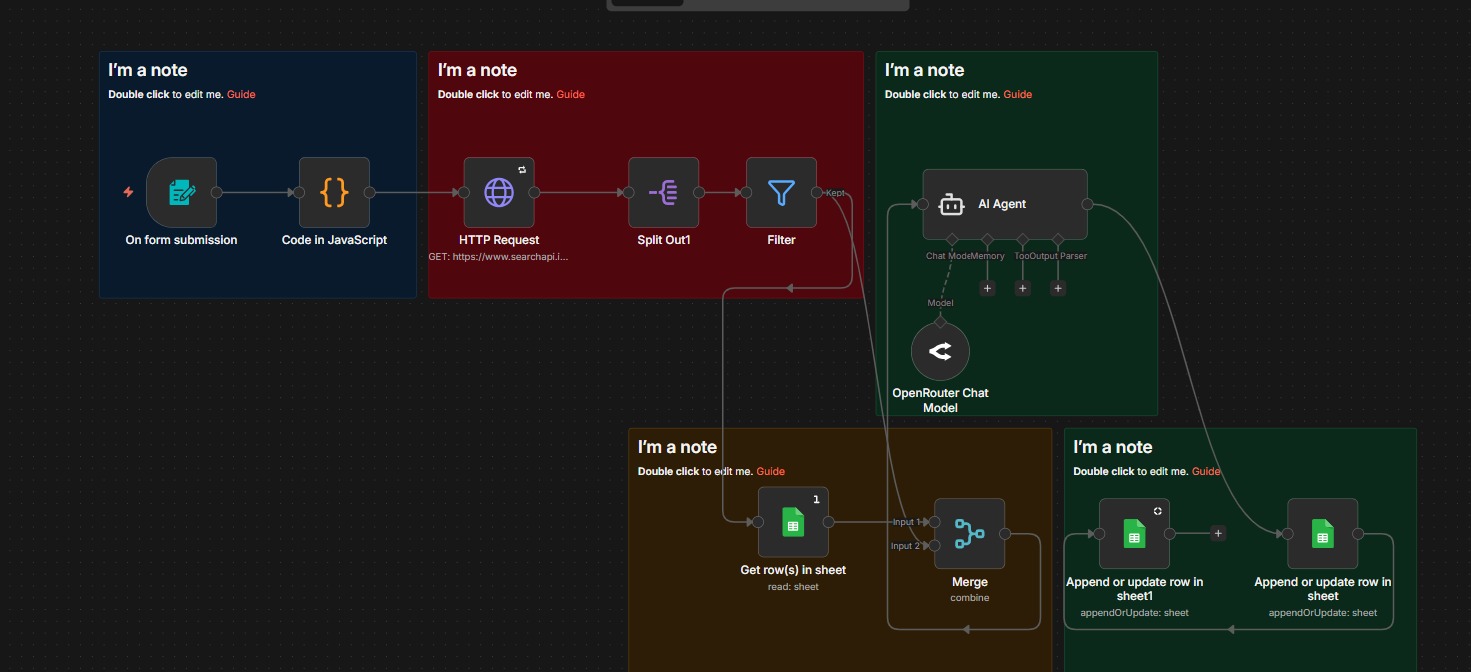
AI-Powered Company Discovery & Lead Intelligence Engine

Automatically find, filter, and enrich high-quality LinkedIn company leads using AI-driven data extraction and smart qualification.

Overview:

This system automates the entire B2B lead discovery process by collecting user-defined search inputs such as keywords, industry, and employee size range. It then searches LinkedIn company data, extracts relevant business intelligence, and enriches each lead using AI analysis.

The workflow not only finds companies but also understands their scale, location, industry, and engagement potential, transforming raw search data into structured, qualified lead records ready for outreach or CRM integration.

Core Challenges:

Manual lead generation from LinkedIn and Google is slow, inconsistent, and heavily dependent on human research. Sales teams often waste time on unqualified or irrelevant companies, leading to poor conversion rates and inefficient outreach.

Solution Delivered:

An intelligent automation system that:

→Collects search filters through a dynamic form (keywords, industry, employee range)
→ Automatically searches LinkedIn company data using Google Search API
→Filters irrelevant or low-quality results
→ Extracts structured business intelligence using AI (location, industry, employee size)
→ Merges and enriches company data into clean datasets →Merges and enriches company data into clean datasets
→Stores validated leads into structured Google Sheets CRM systems
→Supports dual-sheet synchronization for advanced tracking pipelines

This creates a fully automated lead generation engine that continuously feeds high-quality, pre-qualified companies into your sales system.

Workflow Implementation

AI-Powered Voice Outreach & Lead Qualification Automation System

Automated form-to-call pipeline that validates leads, triggers AI voice calls, and classifies responses in real time.
Overview:

This system automates the entire outbound sales and lead qualification process starting from a simple form submission. Once a user submits their details, the system validates and standardizes phone numbers, triggers an AI-powered voice call through VAPI, and tracks the full call lifecycle.

After the call is completed, the system automatically analyzes the outcome (voicemail, completed call, or failed attempt) and logs the result into structured Google Sheets for sales tracking and follow-up actions.

It acts as a fully autonomous SDR (Sales Development Representative), handling both outreach and qualification without human intervention.

Core Challenges:

Manual calling systems are slow, inconsistent, and heavily dependent on human agents. Sales teams struggle with incorrect data entry, invalid phone numbers, missed follow-ups, and poor tracking of call outcomes.
This leads to wasted time, low conversion rates, and fragmented lead management.

An AI-driven outbound calling automation system that:

An intelligent automation system that:

→Captures leads through a structured form interface
→Validates and standardizes international phone numbers automatically
→Filters invalid or incorrectly formatted contacts
→Initiates AI-powered voice calls via VAPI
→ Monitors call status in real time with polling logic
→Detects outcomes such as voicemail, completed calls, or call-backs
→Logs results into categorized Google Sheets pipelines
→Separates leads into Incorrect, Voicemail, Call Back, and Completed segments

This creates a fully automated SDR system that not only calls leads but also intelligently qualifies and organizes them.

Workflow Implementation

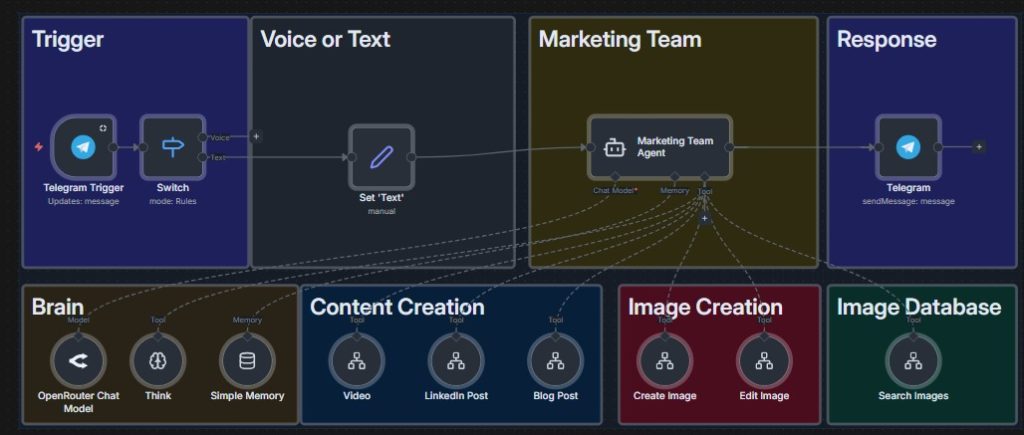
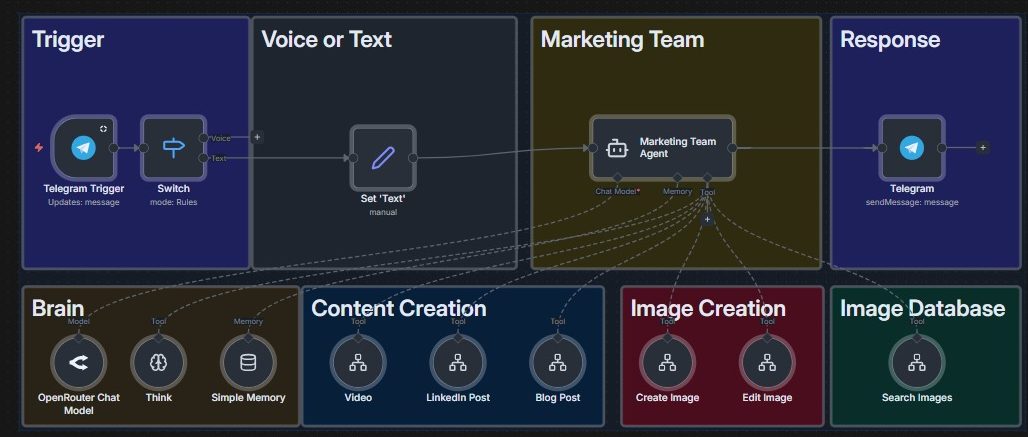
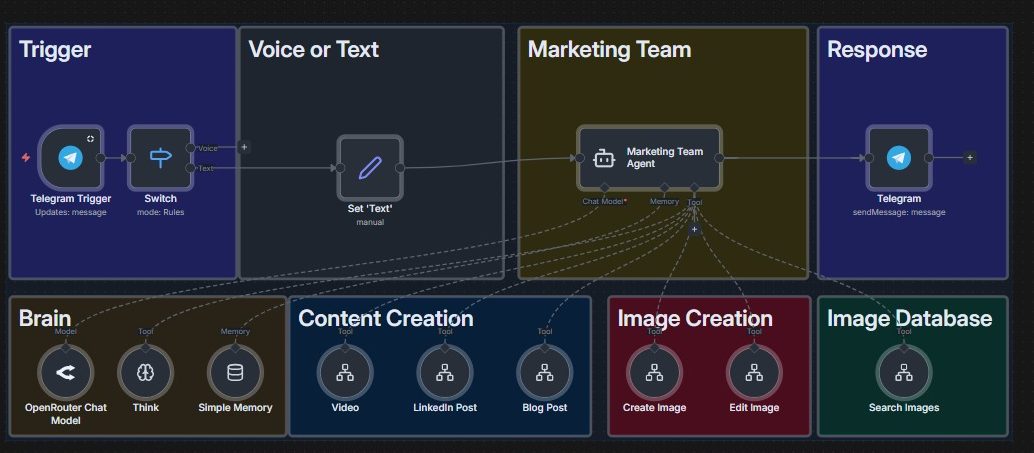
AI-Powered Marketing Automation & Multi-Content Generation System (Telegram AI Agent)

Telegram-based AI marketing assistant that generates content, images, videos, and blog posts using intelligent tool routing and memory-driven conversation flow.
Overview:

This system is a fully automated AI marketing and content creation assistant built inside Telegram using an n8n-based agent architecture.

When a user sends a message, the system processes the input through an AI agent that intelligently decides what action to take—whether to generate an image, create a blog post, write a LinkedIn post, search existing images, or produce a video.

The agent is powered by a language model with memory, allowing it to maintain conversation context per user. It acts as a complete AI marketing team inside a chat interface, capable of handling content creation, visual generation, and social media automation without human involvement.

Core Challenges:

Modern content teams face several challenges:

→ Slow content production across multiple platforms
→ Need for separate tools for images, blogs, videos, and posts
→ No centralized AI system for marketing execution
→ Lack of memory/context in chat-based AI tools
→ Manual switching between creative workflows

This results in fragmented workflows, inconsistent branding, and high operational effort.

Solution Delivered:

This system solves these problems by introducing a multi-tool AI marketing agent that operates directly inside Telegram.

It provides:
→ A unified AI interface for all content needs
→Automatic tool selection based on user intent
→ Memory-based conversation handling per user
→Centralized control of content, visuals, and video generation
→ Smart routing between creation, editing, and search operations

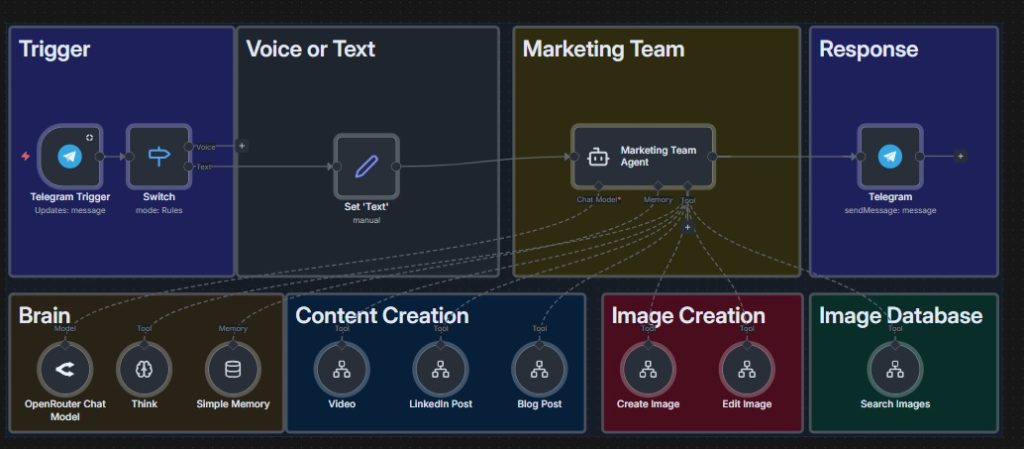
Workflow Implementation

1. Telegram Trigger

2. Input Classification

3. Text Preparation

4. Marketing AI Agent (Core Brain)

Available Tools:

Image Generation System

Content Generation System

Video Generation System

Think Tool

5. Memory System

6. Tool Workflow Execution

7. Response Delivery

AI-Powered Image Generation & Marketing Asset Automation System (n8n Workflow)

Automated image prompt engineering, AI image generation, storage, and multi-channel delivery system with Telegram, Google Drive, and Sheets integration.
Overview:

This system is a fully automated AI image generation pipeline that transforms a simple text prompt into a complete marketing-ready visual asset.

It takes a user request from another workflow, intelligently expands it into a professional image prompt, generates a high-quality AI image using a text-to-image model, and then automatically stores, delivers, and logs the result across multiple platforms including Telegram, Google Drive, and Google Sheets.

The system acts as a fully automated AI creative studio, capable of producing structured, cinematic-quality visuals without manual design input.

Core Challenges:

Traditional image creation workflows face several limitations:

→ Poor-quality prompts from users leading to weak image output
→Manual prompt engineering required for good AI results
→ No structured storage or tracking of generated assets
→ Lack of automation between generation and delivery
→ No centralized logging of creative outputs

This makes scaling AI-generated content difficult and inconsistent.

Solution Delivered:

This system solves these issues by introducing a fully automated image production pipeline that:

→Converts simple user ideas into rich AI prompts
→Enhances prompts using an AI prompt engineer agent
→ Generates high-quality images via OpenRouter Gemini image model
→Converts AI output into usable image files
→Stores images in Google Drive automatically
→Logs metadata into Google Sheets for tracking
→Sends final image directly to Telegram user

Workflow Implementation

1. Workflow Trigger (Execute from Parent System)

2. Image Prompt Engineering Agent

3. AI Image Generation (OpenRouter Model)

4. Convert to File

5. Google Drive Storage

Saves file using:

6. Google Sheets Logging System

7. Telegram Delivery

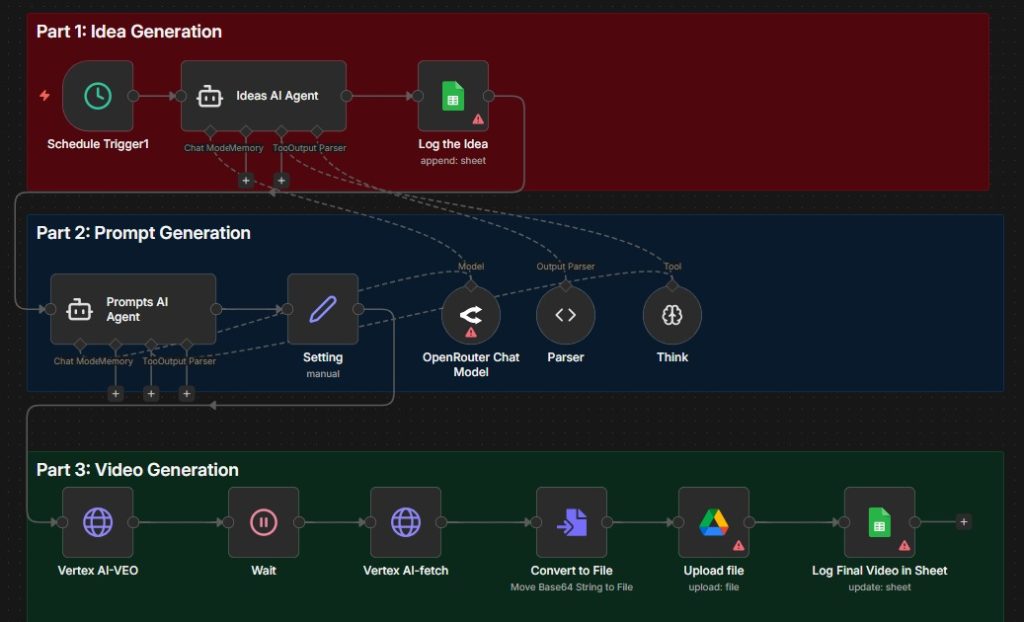
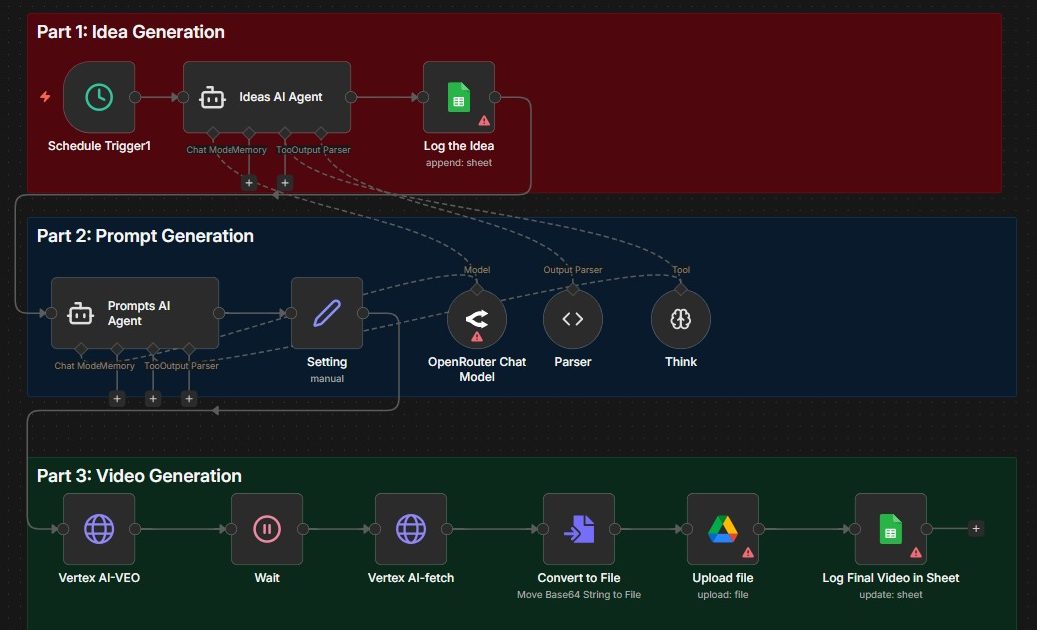
AI-Powered Social Media Idea → Caption → Video Generation Automation System

Fully automated content engine that generates viral ideas, converts them into structured captions, creates cinematic video prompts, produces AI videos via VEO3, and logs everything into Google Sheets for production tracking.
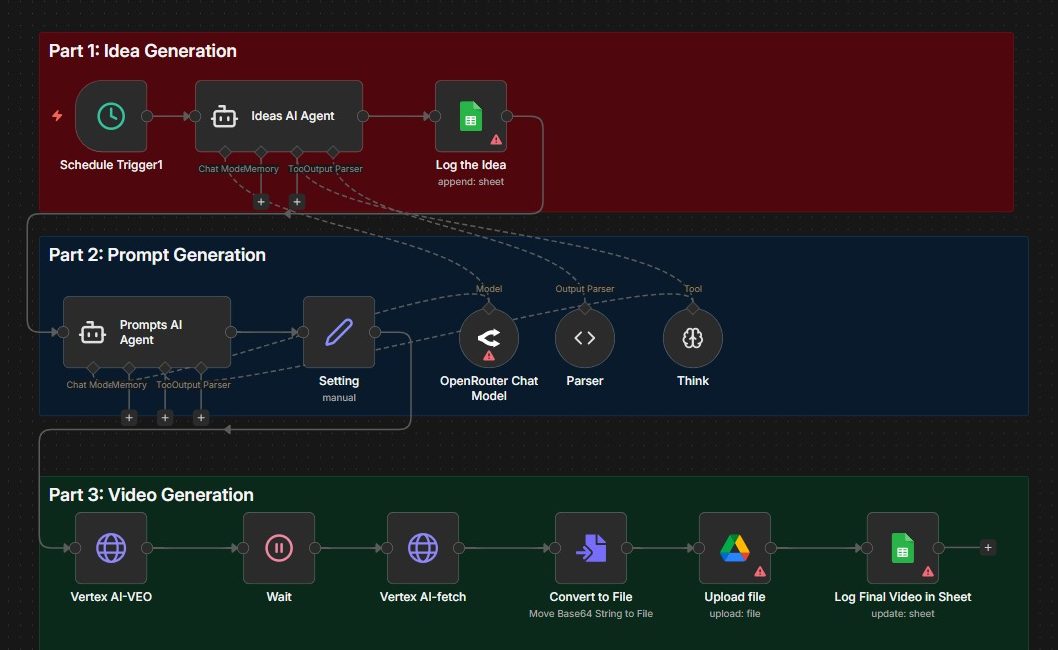
Overview:

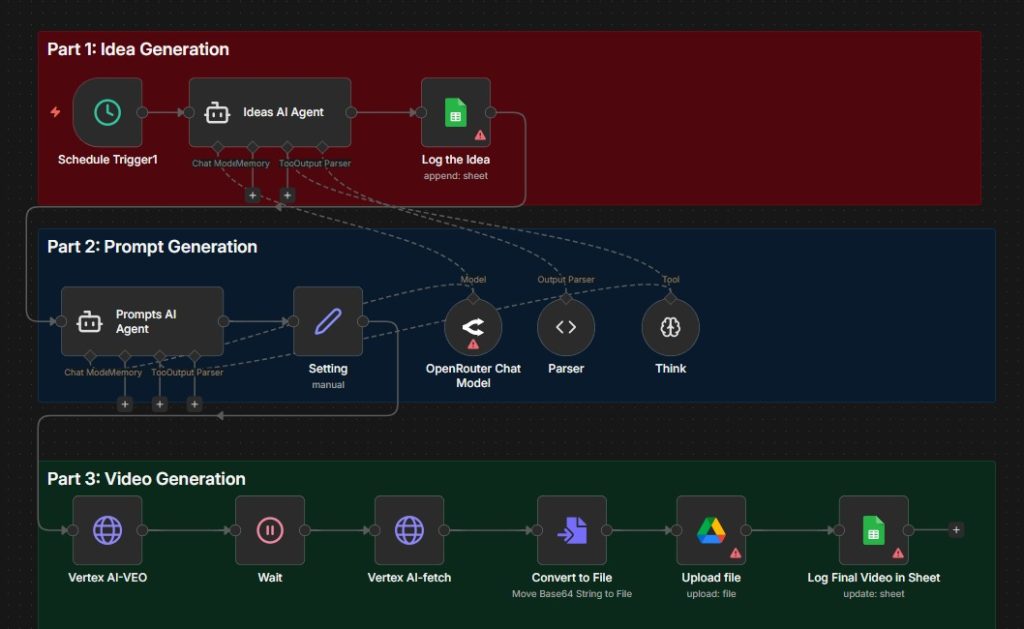
This system is a complete AI-driven social media content production pipeline designed to generate, structure, and automate viral-ready video content at scale. It begins with a scheduled trigger that activates the workflow and sends a topic to an AI Idea Generator. The system then produces a structured content idea, caption, and environment description in a strict JSON format optimized for viral short-form content.

Once the idea is generated, it is passed into a prompt engineering agent, which converts it into a high-quality VEO3 cinematic video prompt. This prompt is then sent to Google Vertex AI VEO model to generate a realistic AI video.

The system waits for the video generation process to complete, fetches the result, converts it into a file, uploads it to Google Drive, and logs all metadata into Google Sheets for tracking and production management.

Core Challenges:

Content creators struggle with:
→Consistently generating viral ideas
→Writing engaging captions with structured hashtags
→Creating cinematic video prompts manually →Producing high-quality AI videos at scale
→Managing production tracking across multiple tools

This results in slow content pipelines, inconsistent quality, and heavy manual effort.

Solution Delivered

A fully automated AI content factory that:

→Generates viral social media ideas using AI agents
→Structures output into Idea, Caption, Environment, and Status fields
→Ensures strict formatting for production-ready content
→Converts ideas into cinematic VEO3 video prompts
→ Generates AI videos using Google Vertex AI (VEO3 model)
→Handles long-running video generation using wait + fetch polling system
→Converts video response into downloadable file format
→Uploads final video to Google Drive automatically
→Logs production data into Google Sheets (idea, status, final output link)
→Maintains full traceability of every generated content piece

This creates a fully automated SDR system that not only calls leads but also intelligently qualifies and organizes them.

Workflow Implementation

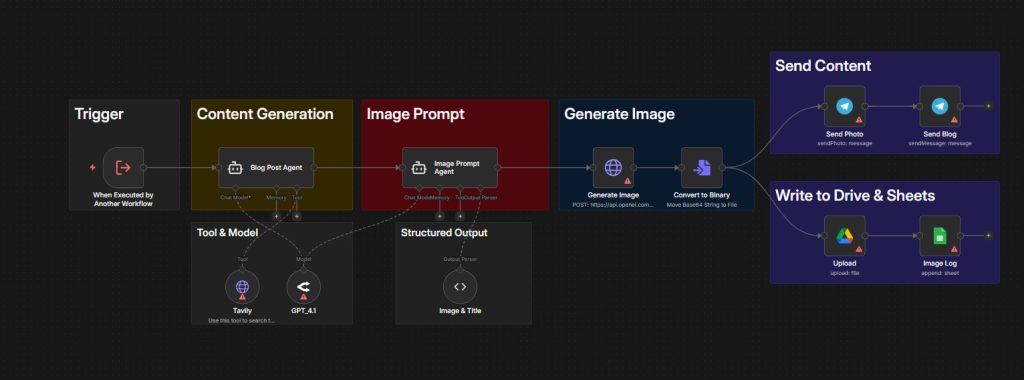
AI-Powered Blog-to-Visual Content Automation System (Blog → Image → Distribution Pipeline)

Fully automated content engine that generates SEO blog posts using real-time web research, converts them into structured visual prompts, creates AI-generated marketing images, and distributes results via Telegram while storing everything in Google Sheets and Drive for tracking.
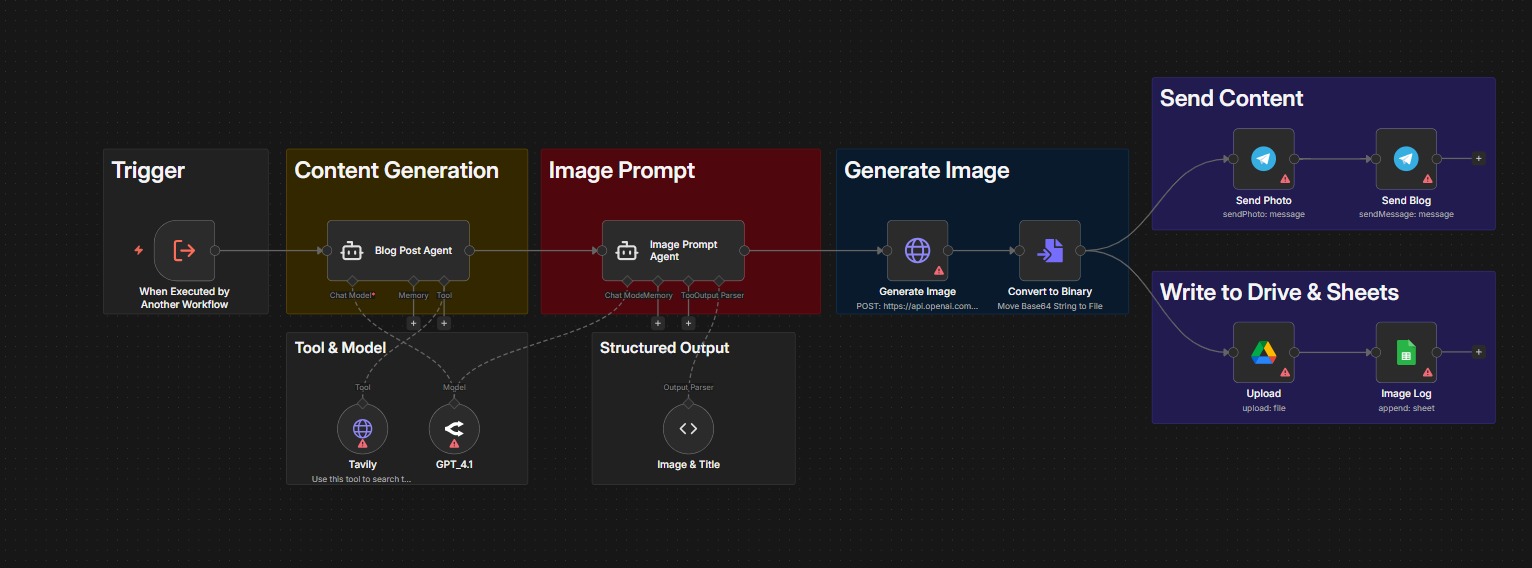
Overview:

This system is a complete AI content production pipeline that transforms a simple topic into a full marketing-ready content package.

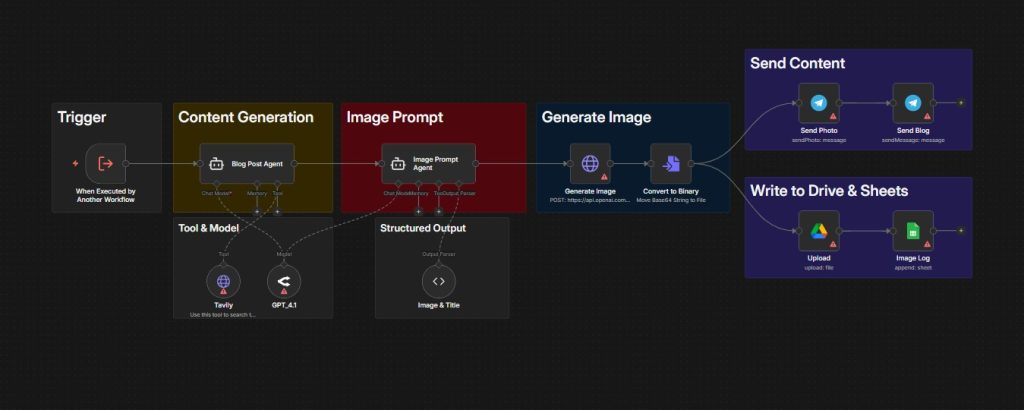
It starts with a workflow trigger that receives a blog topic and target audience. The system then performs real-time research using Tavily, generates a structured SEO-optimized blog post using an AI agent, and ensures content quality with proper formatting, citations, and readability structure.

Once the blog is generated, a second AI agent converts the blog content into a marketing-focused image prompt designed for professional visual generation. This prompt is structured for clarity, branding, and engagement rather than literal scene rendering.

The image prompt is then sent to an AI image generation model (OpenAI GPT-image), converted into a binary file, and distributed through multiple channels. Finally, the system sends the blog and image to Telegram, uploads the image to Google Drive, and logs all production data into Google Sheets for tracking and analytics.

Core Challenges:

Content teams and marketers struggle with:

Writing high-quality SEO blog posts consistently
Performing real-time research before writing
Converting blog content into visual marketing assets
Designing prompts for AI image generation manually
Managing content distribution across platforms
Tracking production history across tools

This results in slow workflows, inconsistent quality, and high manual effort.

Solution Delivered

A fully automated AI content creation system that:

Generates SEO-optimized blog posts using AI + live web research (Tavily API)
Structures long-form content with headings, citations, and conclusions
Converts blog content into marketing-grade image prompts automatically
Produces structured output (Title + Prompt) for visual generation
Generates AI images using OpenAI image model (gpt-image-1)
Converts image response into binary format for processing
Sends final content directly to Telegram (blog + image)
Uploads generated images to Google Drive automatically
Logs all content metadata into Google Sheets for tracking

Maintains full traceability from idea → blog → image → distribution

Workflow Implementation

AI-Powered LinkedIn Blog → Image Prompt → AI Image Generation Automation System

Fully automated content system that generates LinkedIn blog posts, converts them into structured AI image prompts, creates marketing visuals using OpenAI image models, and delivers results directly to Telegram while logging everything into Google Sheets and Drive.
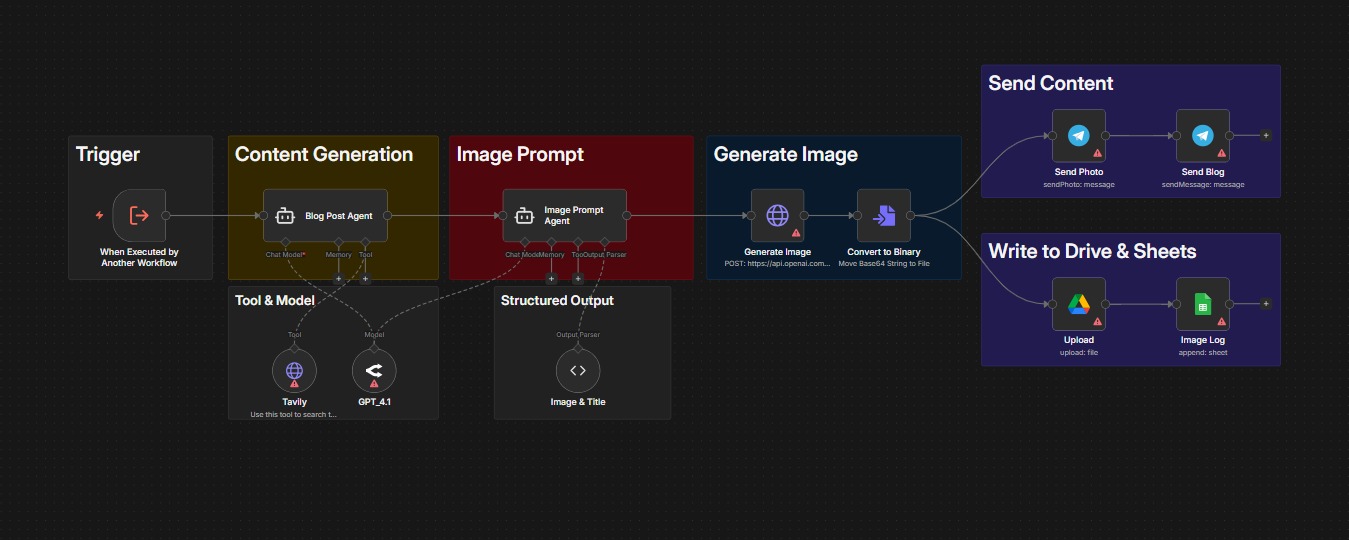
Overview:

This system is a complete AI-driven content generation pipeline designed to automatically create high-quality LinkedIn posts and corresponding visual assets. It starts with a workflow trigger that receives a topic and target audience. The system then generates a fully researched LinkedIn post using real-time web data via Tavily search integration.

Once the post is generated, it is transformed into a structured visual prompt using an AI prompt engineering agent. This prompt is then sent to OpenAI’s image generation model (gpt-image-1) to create a professional marketing-style image.

The generated image is converted into binary format, sent to Telegram, uploaded to Google Drive, and logged into Google Sheets along with the original post data for tracking and content management.

Core Challenges:

Content creators and marketing teams struggle with:

Writing high-quality LinkedIn posts consistently
Turning text content into visually engaging creatives
Maintaining brand-aligned visual consistency
Managing content production across multiple tools
Tracking generated assets and posts efficiently

This results in slow workflows, inconsistent branding, and manual production overhead.

Solution Delivered

A fully automated AI content system that: Generates researched LinkedIn posts using AI + Tavily web search

Structures posts for professional engagement and readability
Converts posts into marketing-ready image prompts
Generates AI images using OpenAI GPT Image model
Sends generated content directly to Telegram
Stores images in Google Drive automatically
Logs all post and asset metadata into Google Sheets
Maintains full traceability of content production lifecycle

Workflow Implementation

1. Trigger System

  • Workflow is triggered manually or via another workflow input
  • Accepts:
    • postTopic
    • targetAudience
    • chatID

2. AI Blog Generation

  • Blog Post Agent uses GPT-4.1 + Tavily API
  • Performs real-time web research
  • Generates structured LinkedIn post with:
    • Hook introduction
    • Educational content
    • Insights and data
    • Source attribution
    • Hashtags and CTA

3. Visual Prompt Creation

  • Image Prompt Agent converts blog into design prompt
  • Focuses on:
    • Marketing-style visuals
    • LinkedIn-friendly aesthetics
    • Modern branding layouts
    • Abstract + conceptual representation

4. Structured Output Parsing

  • Ensures clean structured format:
    • Title (2–4 words)
    • Image Prompt

5. AI Image Generation

  • OpenAI GPT Image Model (gpt-image-1) generates visual
  • Uses structured prompt as input
  • Produces 1024×1024 marketing image

6. Image Processing

  • Image converted into binary format
  • Prepared for distribution and storage

7. Content Distribution

  • Image sent to Telegram chat
  • Blog post sent to Telegram separately

8. Storage & Archiving

  • Image uploaded to Google Drive
  • Organized under dedicated AI folder

9. Logging System

  • Google Sheets logs:
    • Post topic
    • Generated blog content
    • Image title
    • Drive link
    • Content type
  • Enables full content tracking and analytics

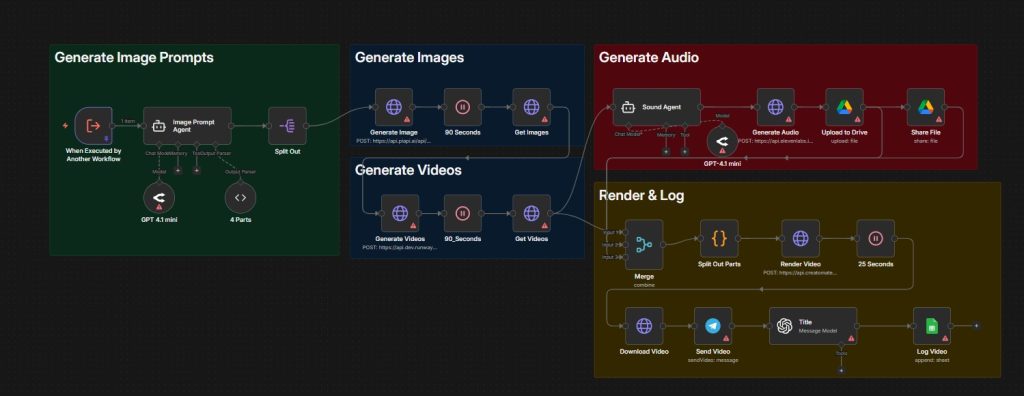
AI-Powered Multi-Modal Video Content Automation System (Text → Image → Video → Audio → AI Rendering → Distribution Pipeline)

Fully automated AI media production engine that transforms a simple video topic into a complete cinematic content package by generating structured image scenes, converting them into AI videos, generating synchronized ambient audio, and assembling everything into a final rendered video for distribution and tracking.

Overview:

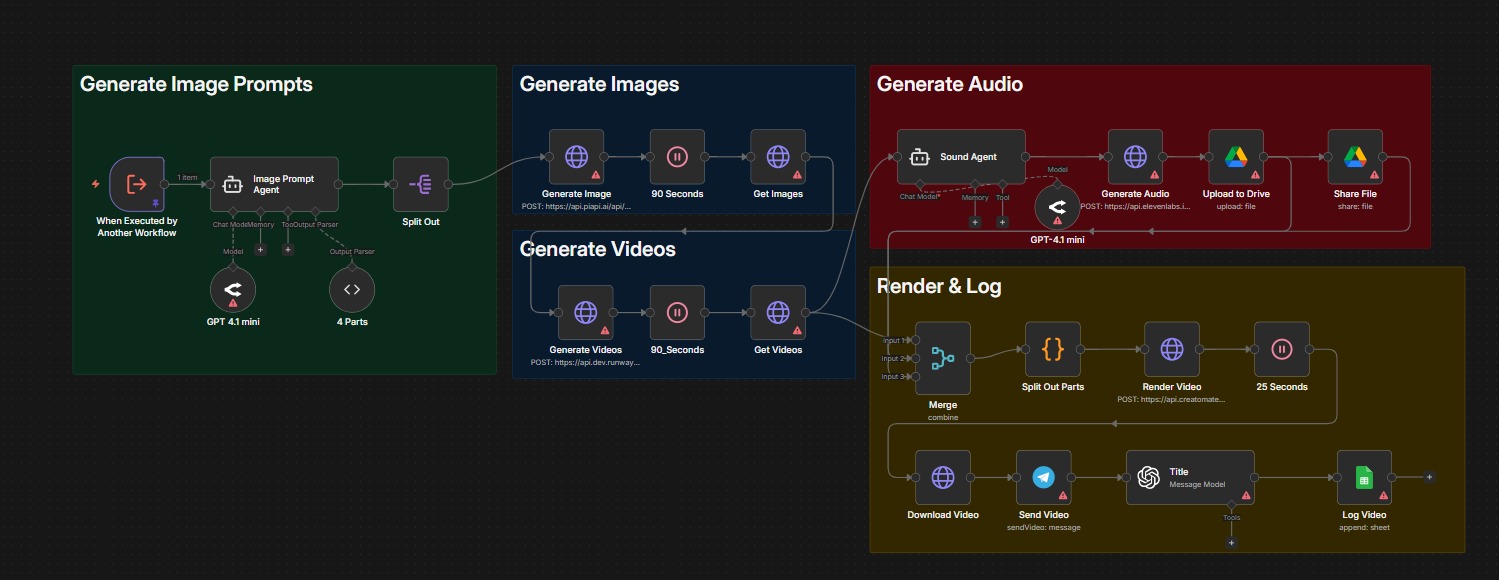
This system is a full-scale AI multimedia generation pipeline that converts a single video topic into a complete short-form video production.

It begins with a workflow trigger that receives a video topic and chat ID. The system then uses a structured AI agent to break the topic into four consistent and sequential visual scenes, ensuring narrative continuity across the entire video.

Each scene is then converted into high-quality image prompts designed for generative AI models. These prompts are processed to create AI-generated images, which are then passed into a video generation engine (Runway) to produce short cinematic clips.

In parallel, the system generates immersive ambient audio using an AI sound generation agent. The audio is designed to match the emotional tone and environmental context of the visual scenes. All generated assets (images, videos, and audio) are merged into a unified structure and processed through a rendering engine (Creatomate), which composes them into a final synchronized video output.

Finally, the system downloads the rendered video, sends it to Telegram, uploads it to Google Drive, and logs all production metadata into Google Sheets for tracking and analytics.

Core Challenges:

Content creators and automation teams struggle with:
→Breaking a concept into structured visual scenes
→Maintaining narrative consistency across multiple AI-generated images
→Generating relevant ambient audio that matches visual storytelling
→Managing asynchronous AI APIs (Runway, PiAPI, ElevenLabs)
→Combining multiple media formats into a single coherent output
→Tracking multi-step AI production pipelines

This leads to fragmented workflows, inconsistent output quality, and high manual post-production effort.

Solution Delivered

A fully automated AI multimedia production system that:
→Converts a single video topic into 4 structured cinematic scenes using AI
→Generates consistent image prompts with narrative continuity
→Produces AI images using generative image APIs (PiAPI / Flux model)
→Converts images into short AI videos using Runway Gen-3 Turbo
→Generates contextual ambient audio using ElevenLabs sound generation API
→Synchronizes multiple media layers into a unified production pipeline
→Uses structured merging logic to combine video + audio + metadata
→Renders final output using Creatomate video composition engine
→Sends completed video directly to Telegram
→Uploads final assets to Google Drive for storage
→Logs full production lifecycle in Google Sheets (tracking, analytics, audit)

Workflow Implementation

1. Trigger Phase

  • Workflow is triggered via external execution
  • Inputs:
    • Video Topic
    • Chat ID

2. Scene Generation (AI Structuring)

  • AI Agent breaks topic into 4 structured visual scenes
  • Ensures:
    • Character consistency
    • Narrative flow
    • Cinematic progression

3. Image Prompt Generation

  • Each scene is converted into a detailed image prompt
  • Structured output:
    • Part 1 → Part 4 prompts
  • Ensures:
    • High visual fidelity
    • Consistent storytelling

4. Image Generation (PiAPI / Flux)

  • Each prompt is sent to image generation model
  • Outputs:
    • High-resolution scene images

5. Video Generation (Runway AI)

  • Each image is converted into a short AI video clip
  • Model:
    • Gen-3 Turbo
  • Output:
    • 4 cinematic video segments

6. Audio Generation (ElevenLabs)

  • AI Sound Agent generates ambient audio based on scene context
  • Produces:
    • Background environmental sound
    • Mood-based audio layering

7. Asset Merging System

  • Combines:
    • Videos
    • Audio
    • Metadata URLs
  • Normalizes all outputs into a unified structure

8. Video Rendering (Creatomate)

  • Uses template-based rendering engine
  • Inputs:
    • 4 videos
    • 4 audio tracks
  • Output:
    • Final synchronized cinematic video

9. Distribution Layer

  • Sends final video to Telegram
  • Uploads file to Google Drive
  • Shares file publicly if required

10. Logging & Analytics

  • Stores full production data in Google Sheets:
    • Video Title
    • Topic Request
    • File Link
    • Generated ID
    • Production Type