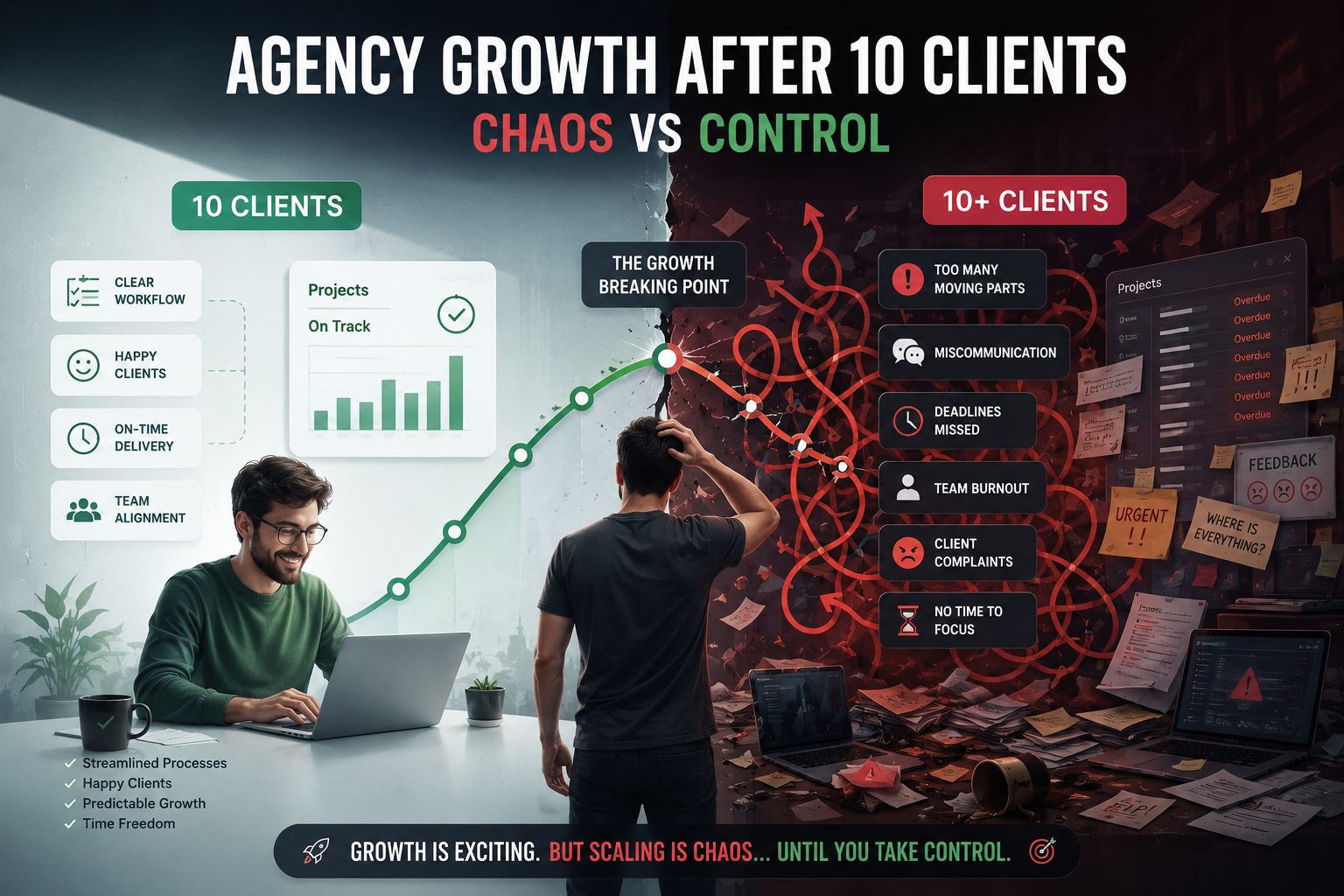
Agency growth is the goal of every agency owner. Reaching your first 10 clients feels like a major achievement, but many agencies soon realize that growth becomes much harder after this stage. The systems that once worked smoothly often start breaking down as client demands, team responsibilities and operational complexity increase.
Understanding why agency growth slows down after the first 10 clients can help you avoid common mistakes and build a more scalable business.
In this article, we’ll explore the biggest agency growth challenges and the strategies agencies use to scale successfully.
Why Growth Feels Easier in the Beginning
In the early stages, agency owners are closely involved in almost every aspect of the business. They handle sales calls, manage projects, communicate with clients and oversee service delivery.
With only a few clients, it is easier to:
- Track project progress
- Respond to client requests
- Manage deadlines
- Maintain service quality
- Build strong client relationships
Because everything is centralized around one person or a small team, decision-making is fast and communication is simple.
However, as the client base grows, the same approach becomes difficult to sustain.
The Biggest Agency Growth Challenges After 10 Clients
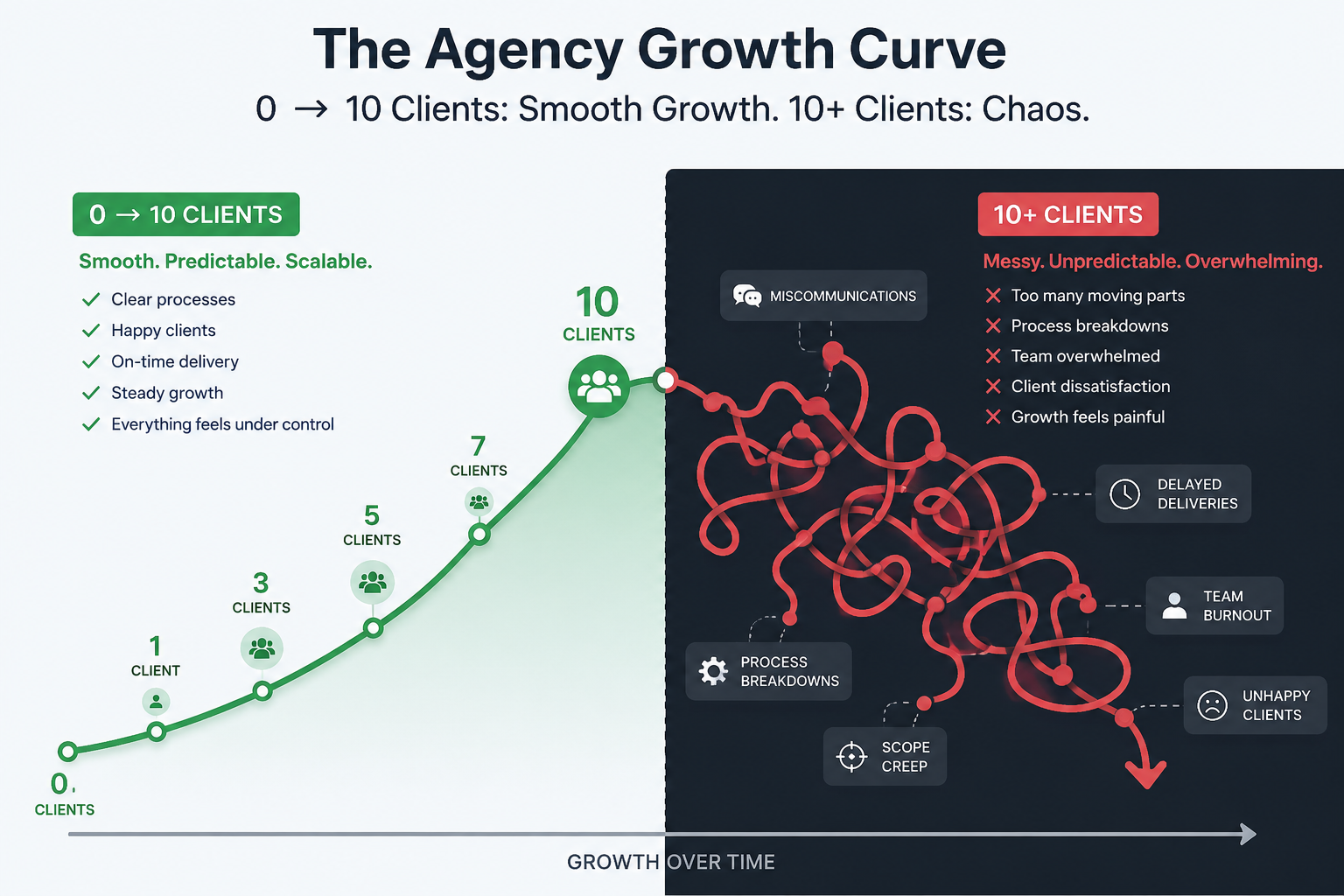
One of the main reasons agency growth becomes harder is that complexity increases faster than revenue.
When you go from 3 clients to 10 clients, you are not simply handling more work. You are managing more communication channels, more projects, more deadlines and more expectations.
Common agency growth challenges include:
- Increased client communication
- Overlapping project timelines
- Team coordination issues
- Slower response times
- Inconsistent service delivery
- Founder burnout
Without proper systems in place, these challenges can quickly slow down growth.
How Poor Systems Limit Scalability
Many agencies hit a growth ceiling because they rely too heavily on manual processes.
For example, if your team manages leads using spreadsheets, tracks projects through email and handles follow-ups manually, inefficiencies will eventually appear.
Poor systems often lead to:
- Lost leads
- Missed follow-ups
- Delayed projects
- Communication breakdowns
- Lower client satisfaction
Successful agency growth depends on creating repeatable systems that support increasing workloads without sacrificing quality.
Why Team Management Matters for Scaling Agencies
As agencies acquire more clients, hiring becomes necessary.
While expanding your team can increase capacity, it also introduces new challenges.
Agency owners must now focus on:
- Employee training
- Performance management
- Task delegation
- Accountability
- Internal communication
Without clear processes, team members may struggle to understand their responsibilities, leading to mistakes and inefficiencies.
Strong team management is essential for long-term agency growth because people and processes must scale together.
How Client Management Drives Long-Term Success
Client management becomes significantly more important after reaching 10 clients.
Every client expects timely communication, project updates and quality service. As the number of clients increases, maintaining those expectations requires a structured approach.
Effective client management includes:
- Clear onboarding processes
- Consistent communication
- Defined project timelines
- Regular reporting
- Proactive support
Agencies that prioritize client management often experience higher retention rates and stronger referrals, both of which contribute to sustainable growth.
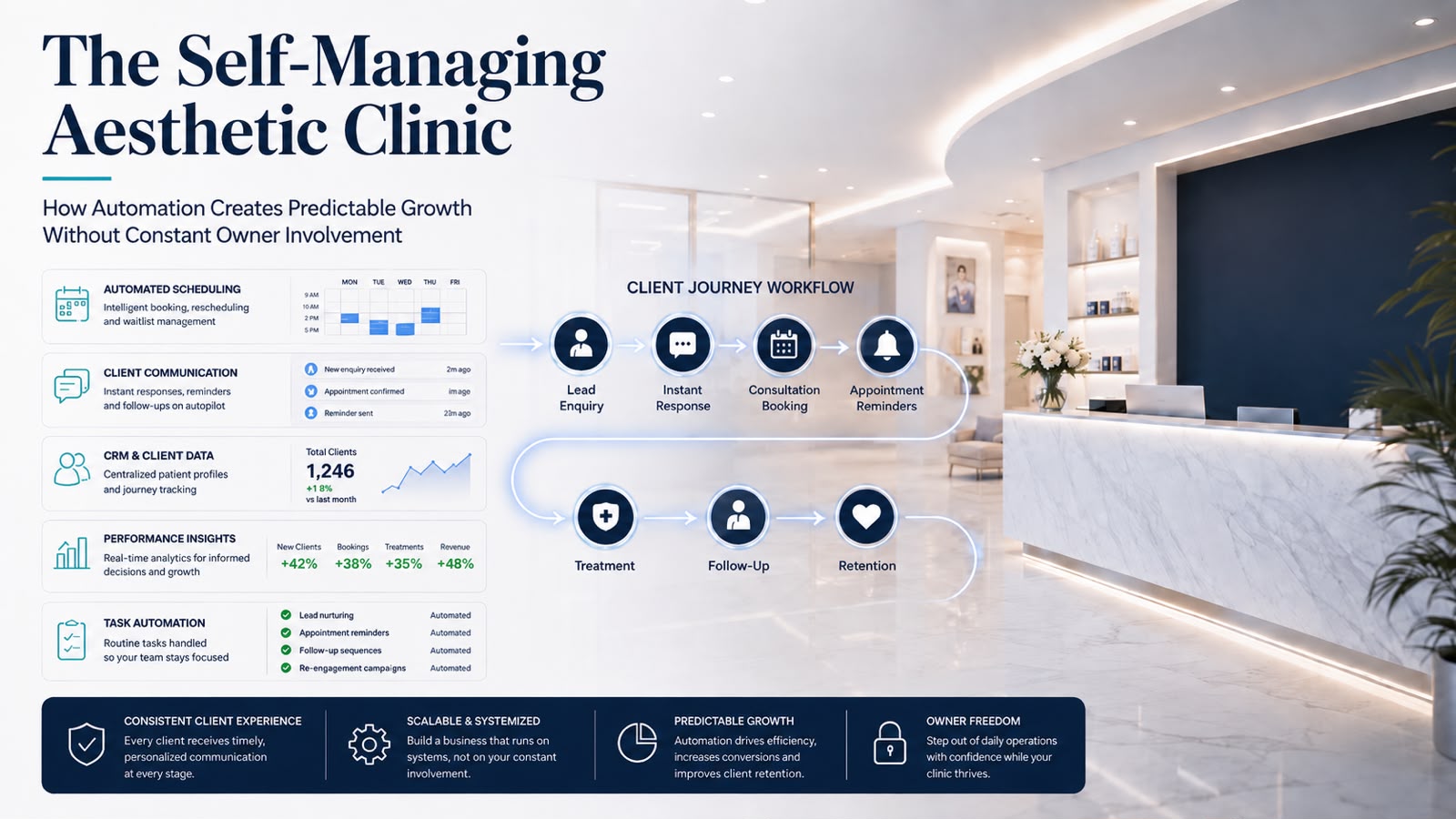
How Automation Supports Agency Scaling
Automation has become one of the most effective ways to support agency growth.
Instead of relying on manual tasks, agencies can automate repetitive processes such as:
- Lead capture
- Appointment scheduling
- Follow-up emails
- Client onboarding
- Task assignments
- Reporting workflows
Automation allows teams to focus on strategic work instead of administrative tasks.
As agencies continue to grow, automation helps improve efficiency while reducing operational bottlenecks.
Industry research from HubSpot shows that automation improves productivity, lead management and overall operational efficiency for growing businesses.
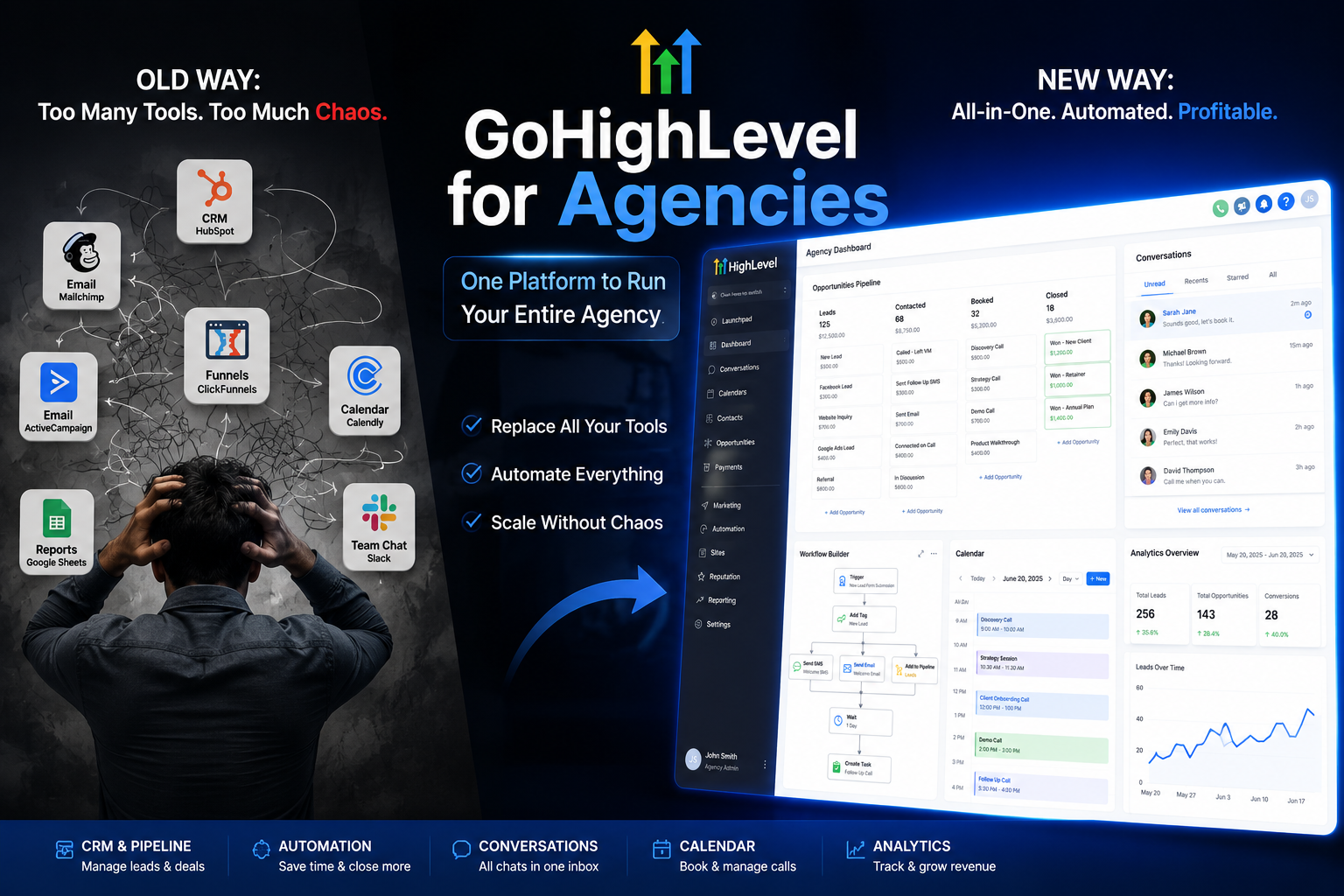
Many growing agencies eventually reach a point where managing multiple tools becomes inefficient. That’s why all-in-one platforms are gaining popularity among agency owners.
Learn how GoHighLevel replaces 10+ marketing tools in one system and helps agencies simplify their operations as they scale.
Common Agency Growth Mistakes to Avoid
Many agencies unintentionally slow their own growth by making avoidable mistakes.
Some of the most common agency growth mistakes include:
1:Trying to Do Everything Manually
Manual processes may work initially, but they rarely support long-term growth.
2:Hiring Too Late
Waiting too long to build a team often results in founder burnout and service delays.
3:Ignoring Processes
Without documented workflows, scaling becomes inconsistent and difficult to manage.
4:Focusing Only on New Clients
Agency growth is not just about acquiring clients. Retaining existing clients is equally important.
5:Using Too Many Tools
Managing multiple disconnected tools can create confusion and reduce efficiency.
Best Practices for Sustainable Scaling
Sustainable agency growth requires a shift from working harder to working smarter.
Here are some proven strategies:
1:Build Standard Operating Procedures (SOPs)
Document recurring tasks so they can be completed consistently.
2:Invest in Agency Systems
Create systems that support lead management, project management and client communication.
3:Improve Workflow Automation
Automate repetitive tasks to save time and reduce errors.
4:Focus on Client Retention
Keeping existing clients is often more profitable than constantly acquiring new ones.
5:Track Performance Metrics
Monitor key indicators such as client retention, project profitability, lead conversion rates and team productivity.
The Future of Agency Growth
The agencies that continue to grow successfully are not always the largest or most experienced. They are often the ones with the strongest systems and operational foundations.
As competition increases, agency growth will depend more on efficiency, automation and scalability than on simply acquiring more clients.
Agencies that invest in better processes today will be better positioned to handle future growth opportunities.
Conclusion
Agency growth becomes harder after your first 10 clients because the complexity of running an agency increases dramatically. More clients bring more communication, more projects, more team management responsibilities and greater operational demands.
The solution is not simply working longer hours. Sustainable agency growth comes from building strong systems, improving client management, implementing automation and creating processes that can scale with your business.
By focusing on efficiency and scalability, agencies can move beyond the 10-client barrier and continue growing without sacrificing quality or profitability.