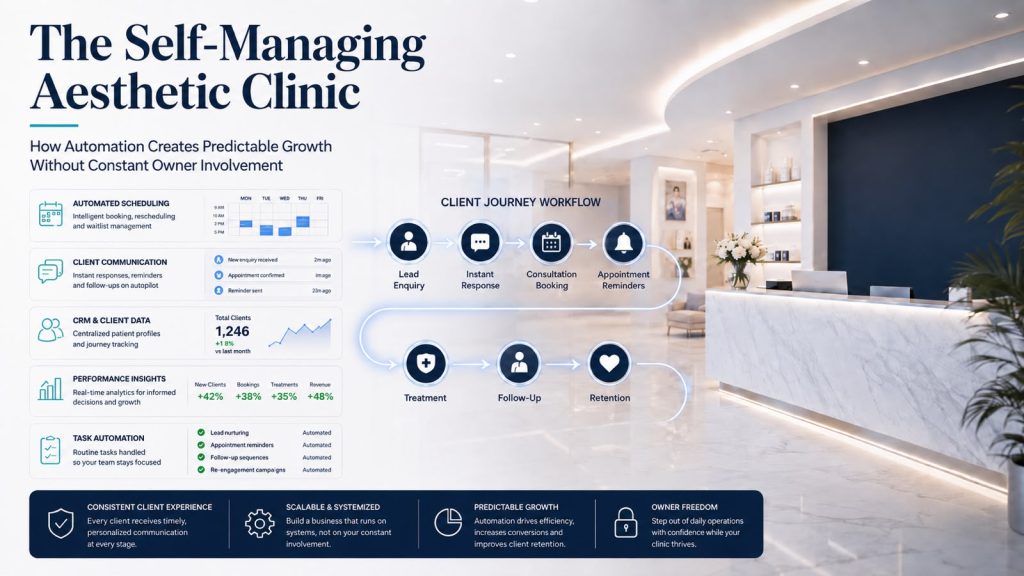
A self-managing clinic is the goal of many aesthetic clinic owners who want to grow their business without becoming involved in every daily task.
As client demand increases, managing enquiries, appointments, follow-ups, and team coordination can quickly become overwhelming.
This is where clinic automation and a structured clinic workflow system become essential. By improving lead management, streamlining operations, and supporting client automation, clinics can reduce owner dependency, improve efficiency and create a more scalable business.
What Is a Self-Managing Clinic?
A self-managing clinic does not mean operating without people.
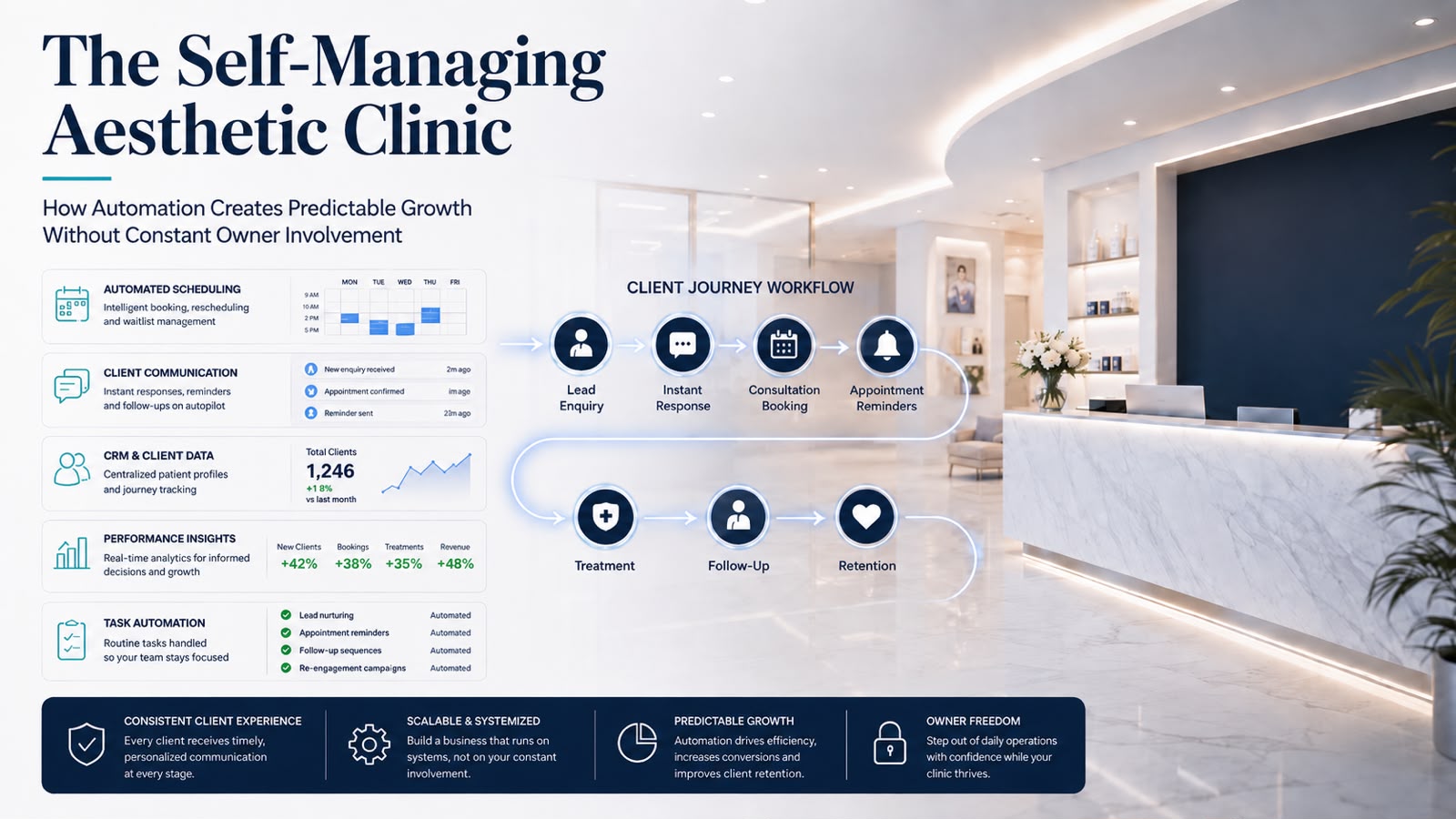
It means the clinic can consistently deliver client experiences, manage workflows and generate revenue without requiring constant owner intervention.
The owner remains responsible for strategy and growth.
The systems handle execution.
In a self-managing clinic:
⦿ Leads receive immediate responses
⦿ Consultations are booked automatically
⦿ Appointment reminders are sent without staff involvement
⦿ Follow-ups happen consistently
⦿ Tasks are assigned automatically
⦿ Team performance is visible through reporting
⦿ Client receive a predictable experience
The result is greater operational stability and less dependence on individual employees.
Why Most Clinics Become Owner-Dependent
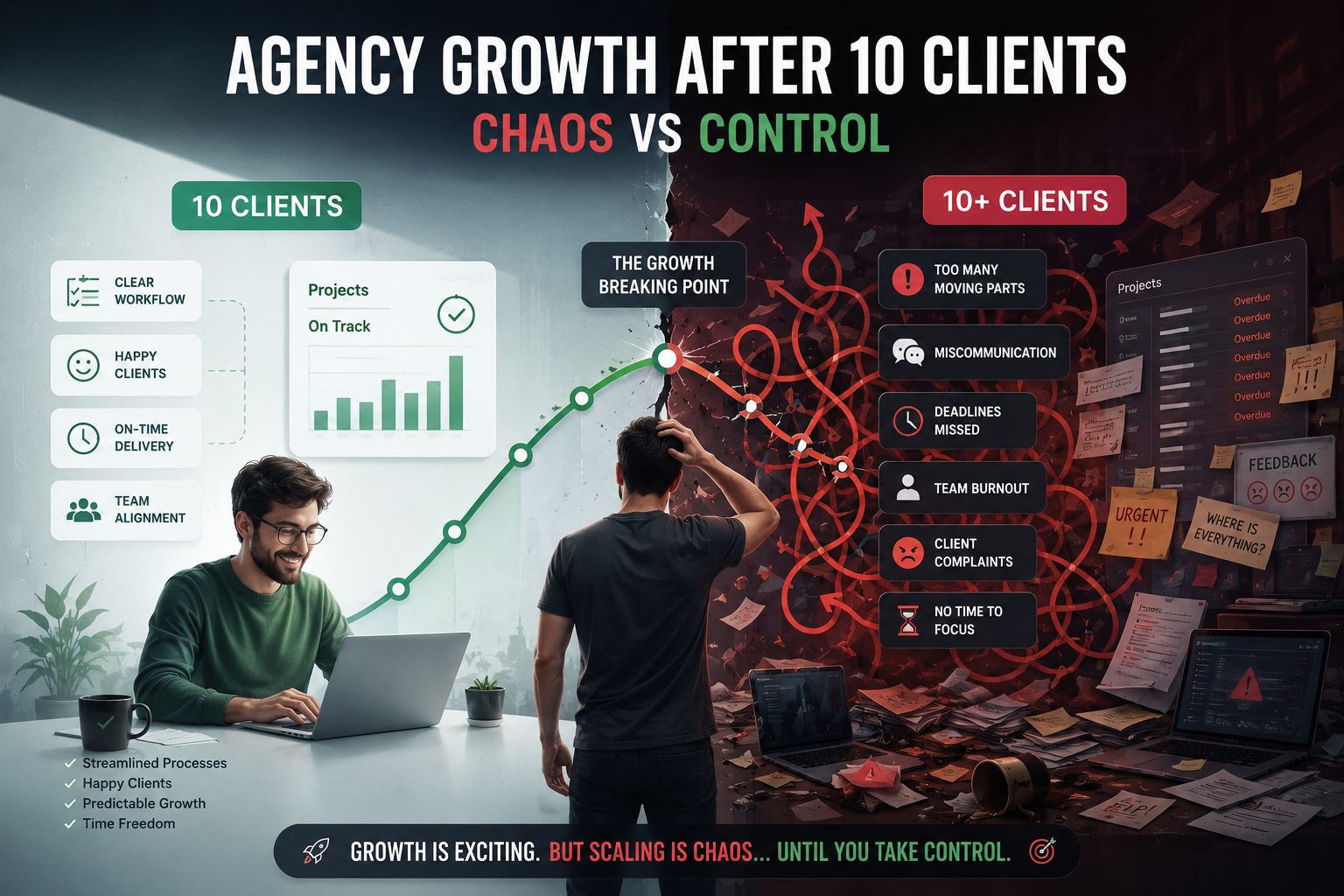
Many clinics grow quickly before operational systems mature.
At first, this works.
The owner personally handles enquiries, follows up with leads, solves problems and keeps everything moving.
→ Eventually volume increases.
→ More enquiries arrive.
→ More appointments need coordination.
→ More clients require communication.
The systems that worked for ten client per week begin breaking under the pressure of fifty or one hundred clients per week.
Common signs of owner dependency include:
⦿ Staff constantly seeking approval
⦿ Missed follow-ups
⦿ Inconsistent client communication
⦿ Leads slipping through the cracks
⦿ Appointment scheduling issues
⦿ Lack of operational visibility
⦿ Difficulty taking time away from the business
These problems are rarely caused by poor staff performance. They are usually symptoms of missing systems.
System 1: Automated Lead Management
The client journey begins long before treatment.
It starts when someone submits a website form, sends a social media message or requests information about a treatment.
Many clinics still rely on staff manually monitoring enquiries. This creates delays.
Even a few hours can dramatically reduce the likelihood of converting an interested prospect into a consultation. A self-managing clinic removes this dependency.
Workflow Example
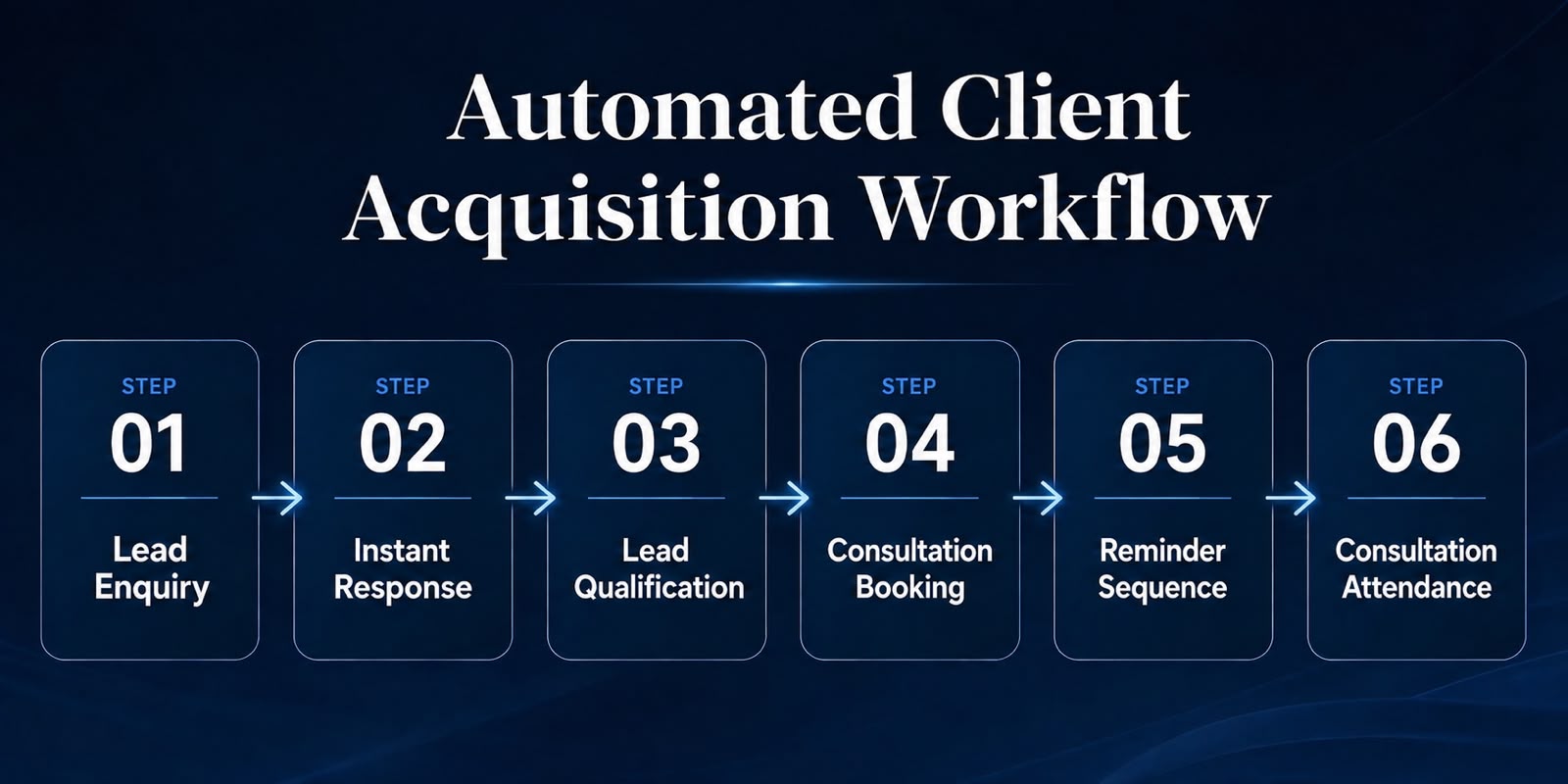
Automation ensures every enquiry receives immediate attention regardless of business hours. Clients feel acknowledged instantly.
Automation ensures every enquiry receives immediate attention regardless of business hours. Modern AI-powered follow-up systems can significantly improve response times and help clinics prevent valuable leads from slipping through the cracks.
Staff spend less time manually responding to repetitive questions. Most importantly, no lead gets forgotten.
System 2: Smart Appointment Management
Scheduling problems create significant operational friction.
→ Double bookings.
→ No-shows.
→ Last-minute cancellations.
→ Manual confirmation calls.
These issues consume valuable administrative time.
Modern automation systems allow clinics to streamline scheduling while improving client convenience.
Clients can:
⦿ Book appointments online
⦿ Reschedule without calling
⦿ Receive confirmations automatically
⦿ Receive reminder sequences before appointments
This creates a smoother experience for both clients and staff. Instead of chasing appointments, the system manages much of the communication automatically.
Workflow Example
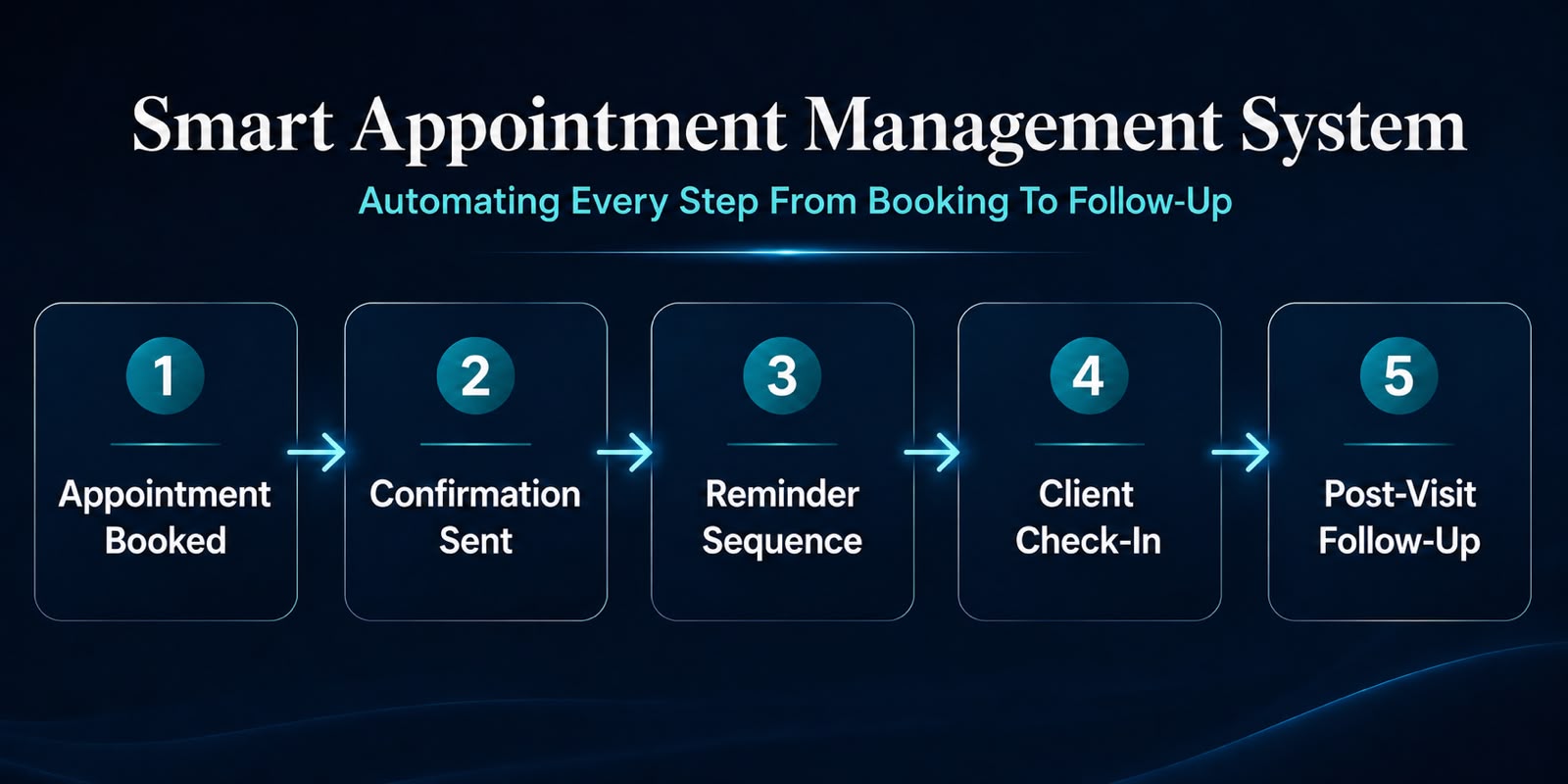
Every step happens consistently. No manual tracking required.
System 3: Client Communication Automation
One of the biggest operational bottlenecks in aesthetic clinics is communication. Clients expect fast responses.
They ask questions before treatment. They need aftercare instructions.
They want updates regarding appointments. Without systems, communication becomes reactive.
Staff spend large portions of the day answering repetitive messages. Automation creates consistency.
Common automated communication workflows include:
⦿ Consultation reminders
⦿ Treatment preparation instructions
⦿ Aftercare guidance
⦿ Review requests
⦿ Rebooking reminders
⦿ Membership updates
This does not replace human interaction. It ensures routine communication happens reliably while staff focus on conversations that require personal attention.
The result is a better client experience and reduced administrative workload.
System 4: Team Accountability Systems
Many clinic owners feel trapped because they lack visibility.
They do not know:
⦿ How quickly leads are contacted
⦿ How many consultations convert
⦿ Which tasks are overdue
⦿ Which team members are performing well
⦿ Where operational bottlenecks exist
Without visibility, the owner becomes the reporting system. Everyone asks them questions because the information lives in their head.
A self-managing clinic operates differently.
→ Tasks are assigned automatically.
→ Deadlines are visible.
→ Performance metrics are tracked.
→ Responsibilities are clearly defined.
Instead of managing people through constant supervision, the owner manages through systems. This creates accountability without micromanagement.
System 5: Client Retention Automation
Many clinics focus heavily on acquiring new clients. Yet long-term profitability often comes from retaining existing ones.
A client who already trusts your clinic is significantly more likely to return for additional treatments. Unfortunately, retention is often inconsistent.
→ Staff get busy.
→ Follow-ups are forgotten.
→ Clients disappear.
Automation helps maintain ongoing relationships.
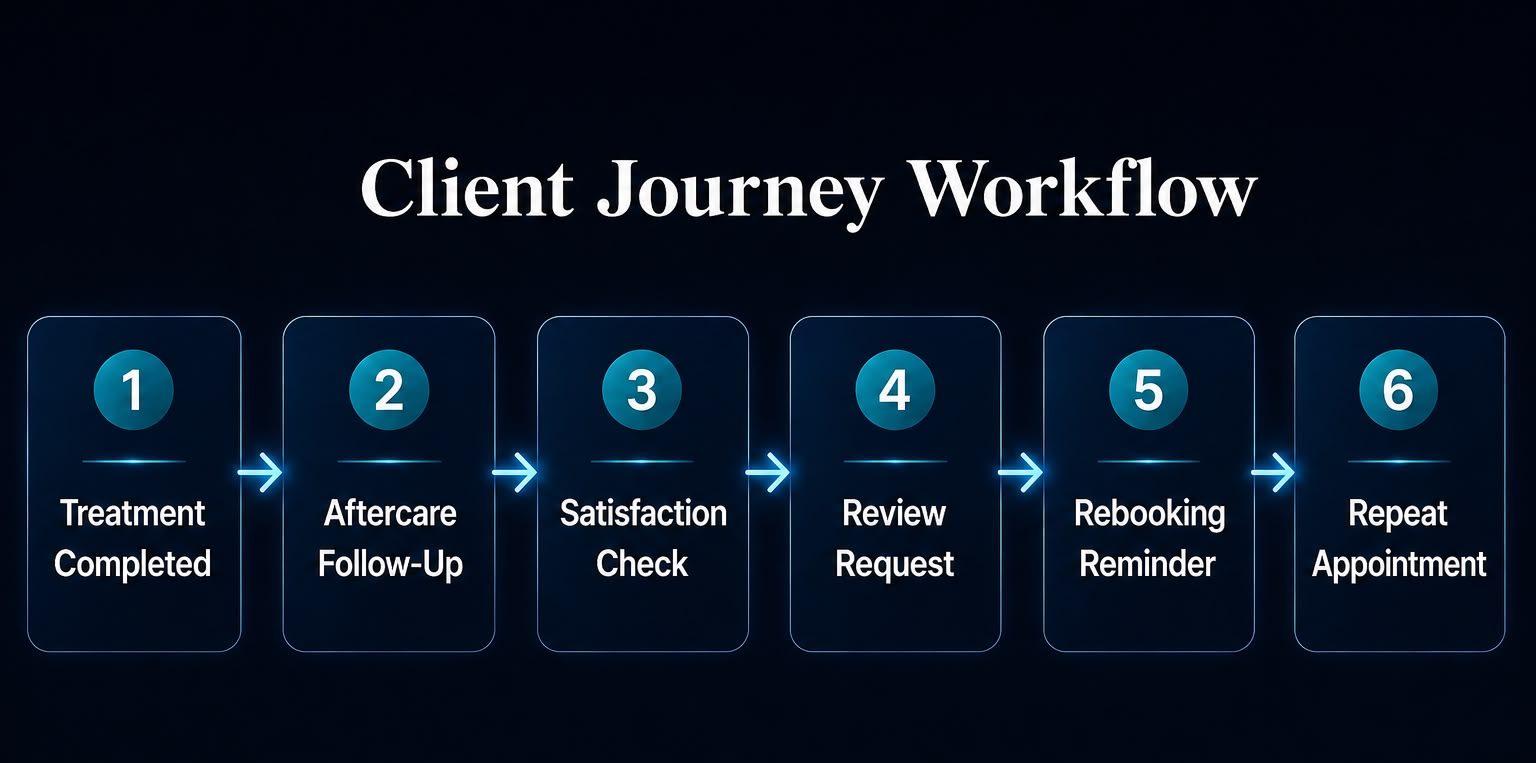
Every interaction strengthens the client relationship.
Instead of relying on memory, the system ensures every client receives the same level of care and attention.
The Role of Reporting in a Self-Managing Clinic
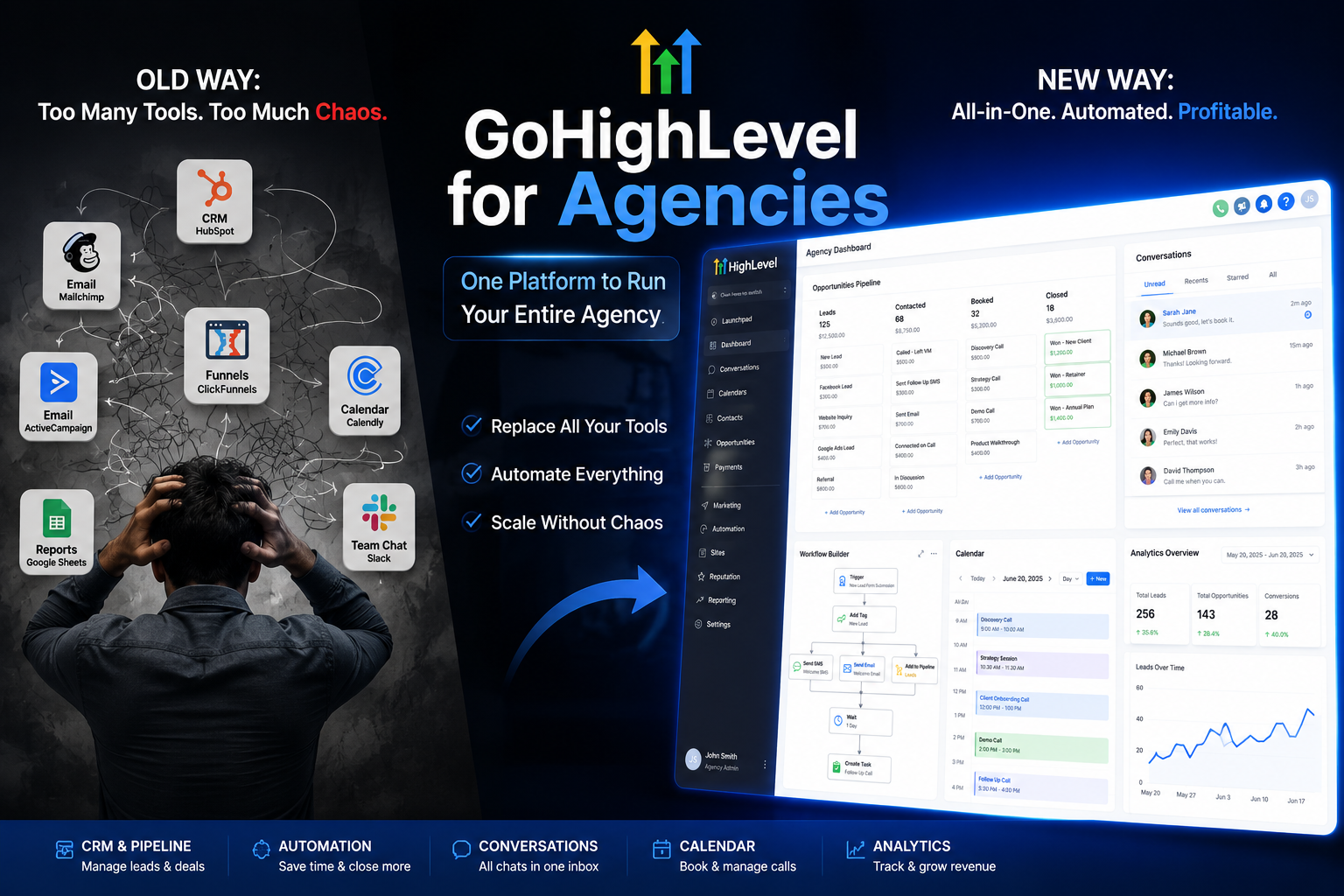
A clinic cannot improve what it cannot measure. Many owners spend hours gathering information from spreadsheets, calendars, messaging apps and multiple software platforms.
This approach creates delays and often produces incomplete insights. Modern clinic systems provide real-time visibility into key performance indicators.
Important metrics include:
⦿ Lead response time
⦿ Consultation booking rate
⦿ Consultation attendance rate
⦿ Treatment conversion rate
⦿ Client retention rate
⦿ Revenue per client
⦿ No-show rate
When reporting becomes automated, decision-making improves. Owners spend less time collecting data and more time acting on it.
Automation Is Not About Replacing People
A common misconception is that automation replaces staff. The opposite is usually true.
Automation removes repetitive tasks so employees can focus on higher-value activities. Instead of manually sending reminders, staff can spend more time supporting clients.
Instead of chasing follow-ups, they can focus on delivering exceptional service.
The goal is not fewer people. The goal is better use of people.
The most successful clinics combine talented teams with effective systems. That combination creates operational excellence.
Building a Growth System With Aesthetic Clinic Automation
The ultimate purpose of automation is not convenience. It is scalability.
A clinic that depends on the owner for every decision eventually reaches a ceiling. A clinic supported by automated workflows, clear processes and measurable accountability can continue growing without increasing complexity.
→ The owner moves from operator to leader.
→ The team gains clarity.
→ Clients receive a more consistent experience.
→ Revenue becomes more predictable.
→ Growth becomes more sustainable.
That is what truly defines a self-managing clinic. Not the absence of people.
But the presence of systems that allow the business to perform at a high level every day, whether the owner is in the clinic or not.
Final Thoughts
Aesthetic clinic automation is no longer simply a productivity tool. It has become a strategic advantage.
The clinics that continue to rely on manual processes often struggle with inconsistency, missed opportunities and owner burnout.
The clinics that invest in self-managing systems create something far more valuable.
They create a business that can deliver exceptional client experiences, support long-term growth and operate efficiently without constant owner involvement.
The future belongs to clinics where people focus on client care and systems handle everything else.